
From Dysfunction to Cohesion: How Teams Build True Effectiveness
Every organization aspires to have effective teams — teams that deliver results, adapt to challenges, and stay aligned even under pressure. Yet, despite strategy, skill, and structure, many teams struggle with something less visible but far more powerful: human dynamics.
At Verund Consulting, we have seen this pattern repeatedly across industries — from coconut processing floors to apparel manufacturing to bakery industry to management teams of customer interface. People are talented, but trust is fragile. Meetings happen, but real dialogue does not. Tasks are completed, but energy and accountability fade.
So, what makes a team truly effective? The answer lies not in better systems, but in how people relate, feel, and respond within those systems.
Understanding Why Teams Falter
Patrick Lencioni’s Five Dysfunctions of a Team provides a clear lens into why collaboration breaks down. At the base of the model is absence of trust — when members hesitate to be open about weaknesses or mistakes. This quickly leads to fear of conflict, where people avoid honest debate, creating artificial harmony. Without healthy debate, teams experience lack of commitment — unclear decisions and weak follow-through. Soon, avoidance of accountability emerges, as no one feels safe enough to confront poor performance. Finally, the team ends up in inattention to results, where individuals focus on personal agendas rather than collective success. Refer figure 01 for details.
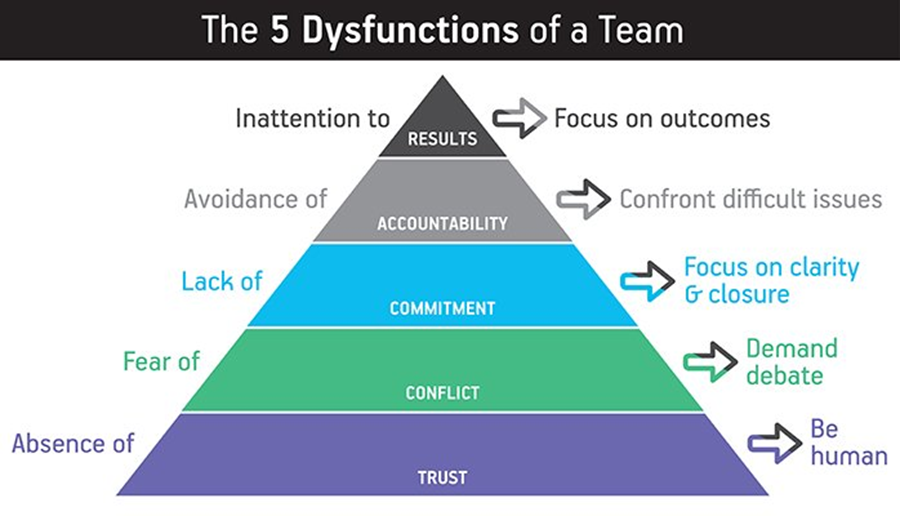
Figure 01 : Five dysfunctions of a team by Patrick Lencioni
For instance, in one of our client teams, supervisors avoided challenging poor maintenance practices because they feared upsetting colleagues. That silence led to recurring machine breakdowns, delayed orders, and lost trust among departments. The dysfunction was not technical — it was relational.
The Emotional Dimension: Why Intelligence Matters
Behind these dysfunctions lies a deeper layer — Emotional Intelligence (EI). When team members lack self-awareness, empathy, or emotional regulation, misunderstandings multiply. A simple process delay can trigger blame instead of collaboration.
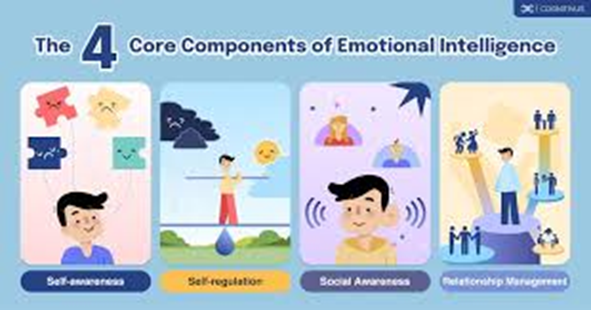
Figure 02: Four core elements of emotional intelligence
In a production setting, an emotionally intelligent supervisor does not react with frustration to a defect; they pause, identify the cause, and guide the operator to learn. In a leadership team, emotionally intelligent members read the room, manage tone, and ask questions before judging.
Research consistently shows that teams with higher collective emotional intelligence have stronger trust, smoother conflict resolution, and better performance over time. In simple terms, EI provides the emotional stability that teamwork demands.
Turning Emotion into Action: The 13 Trust Behaviors
If EI explains why teams behave the way they do, Stephen M. R. Covey’s 13 Trust Behaviors explain how to change that behavior. Trust, in Covey’s view, is not a feeling — it is a set of repeatable actions. When leaders “Talk Straight,” “Clarify Expectations,” “Right Wrongs,” and “Listen First,” they model reliability and transparency.
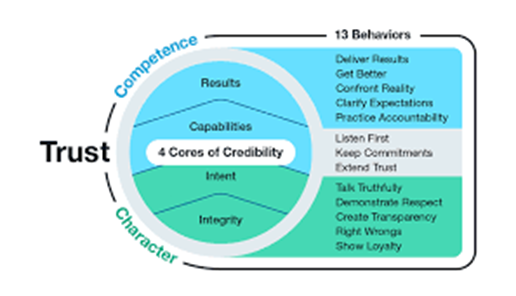
Figure 03 :13 trust behaviors by Stephenson M.R.Covey
In practice, this means:
– When a production planner admits a scheduling mistake early, it builds credibility rather than blame.
– When a team leader consistently follows through on promises, peers start mirroring that integrity.
– When managers seek feedback — “How did my decision affect your team?” — they extend trust and invite accountability.
These micro-behaviors rebuild the very foundation of teamwork that dysfunction erodes. Over time, trust becomes visible — in the way meetings feel, how problems are solved, and how people respond when things go wrong.
The Culture Layer: Creating Psychological Safety
Even when individuals grow emotionally and adopt trust-based behaviors, they need an environment that supports them. This is where Psychological Safety (PS) defined by Harvard’s Amy Edmondson and reinforced by Google’s Project Aristotle — becomes essential.
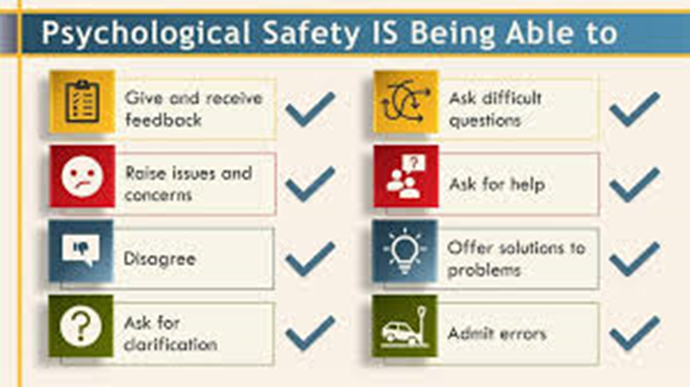
Figure 04 : Psychological safety
A psychologically safe team is one where members can question, suggest, or admit mistakes without fear of humiliation or punishment. In our work with clients, supervisors were encouraged to openly discuss process failures rather than hide them, problem-solving accelerated. The number of “silent errors” dropped, and teams began learning faster.
PS turns trust and EI into a collective culture. It ensures that vulnerability is not a weakness but a strength. Without it, improvement stalls because fear silences truth.
Integrating the Model: From Dysfunction to Effectiveness
When seen together, these four layers form a powerful journey of transformation — a pyramid from dysfunction to cohesion:
1. Diagnose Dysfunction – Recognize where collaboration breaks down.
2. Build Emotional Intelligence – Develop the self and social awareness needed to repair it.
3. Practice the 13 Trust Behaviors – Convert awareness into consistent, trustworthy action.
4. Create Psychological Safety – Sustain the new behaviors through a supportive climate.
Each level enables the next. EI makes trust possible; trust behaviors make safety visible; safety makes effectiveness sustainable. In high-performing teams, these elements become inseparable — trust drives speed, EI drives understanding, and PS drives learning.
Conclusion
Team effectiveness is not an accident. It is the result of deliberate effort to balance performance with relationships, and results with respect. Teams that invest in emotional intelligence, trust-based behavior, and psychological safety move beyond short-term performance — they achieve resilient effectiveness.
As we often tell our clients:
“You don’t build strong teams by fixing people; you build them by designing the conditions where people bring their best.”
When those conditions exist, dysfunction fades, energy rises, and results follow — naturally and consistently.